
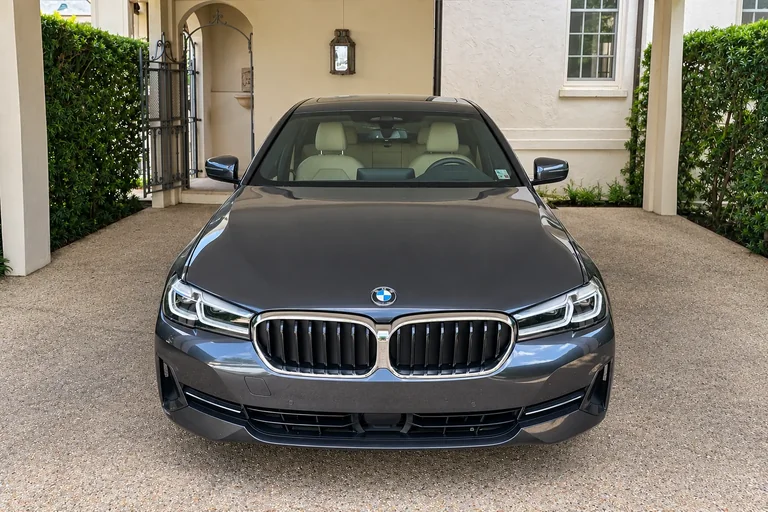
What ADAS means
ADAS stands for advanced driver-assistance systems. These are the features that help you stay in your lane, warn you about a possible collision, or keep a set distance with adaptive cruise control.
They rely on cameras and sensors that read the road. If a camera is aimed even slightly off, the system can read the lane or the car ahead in the wrong place.
Why the windshield camera matters
On many vehicles, a forward-facing camera sits near the rearview mirror and looks through the windshield. When the windshield is replaced, the camera is moved to the new glass. Calibration makes sure it is aimed the way the automaker intended.
Even a new windshield of the right type can sit very slightly differently from the old one. A small change in angle at the camera becomes a bigger error far down the road, which is why the aim is checked against the automaker specification.
Does my vehicle need calibration?
A few quick checks help:
- Look for a camera housing behind the rearview mirror.
- Check your owner’s manual for lane keeping, collision warning, or automatic braking.
- Note any driver-assistance warning lights on the dashboard.
Then share your year, make, and model when you request service. Each automaker sets its own requirements, and the team will check what applies to your vehicle.
Common features and the sensors behind them
Every vehicle is set up a little differently. That is why the year, make, and model matter so much when you book.
- Lane departure warning and lane keeping usually rely on the windshield camera.
- Collision warning and automatic emergency braking may use the camera, a front radar, or both.
- Adaptive cruise control often uses a front radar, and on some vehicles the camera as well.
Other work that can affect calibration
A windshield replacement is the most common reason for calibration, but it is not the only one. Front-end repairs, a camera bracket that was removed, or changes to the way the vehicle sits on the road can also call for a check. Tell the team about any recent work when you request service.
Static and dynamic calibration
Static calibration uses targets placed in front of the vehicle in a controlled setup. Dynamic calibration is completed on the road under the right driving conditions.
Some vehicles need one, some need the other, and some need both. Some calibrations need specific space and conditions, so the team confirms the right procedure and setting for your vehicle.
What pre- and post-scan reports tell you
A pre-scan checks the vehicle systems before the work begins. A post-scan checks them again afterward. With our calibration service, both reports are included, so you have a record of the work.
What to ask before booking
- Does my vehicle need calibration after a new windshield?
- Is it static, dynamic, or both for my vehicle?
- Where will the calibration take place?
- Will I get pre- and post-scan reports?
- How long is the safe drive-away time after the new glass?
- Can the calibration happen at the same visit as the new windshield?
- What should I watch for on the road afterward?
Signs a camera may need attention
If you notice any of these after glass work, stop relying on the feature and contact the team.
- A driver-assistance warning light stays on.
- Lane keeping pulls toward one side or alerts at the wrong times.
- Collision warnings appear when nothing is ahead.
Calibration with mobile service
You can request calibration together with your windshield replacement. Tell us the address and your vehicle details. Because some calibrations need specific space and conditions, the team confirms the right setting before the visit.
After your new windshield
Pay attention to dashboard warning lights and to how lane keeping feels on the road. If something seems off after a windshield replacement, contact the team so they can check it.
A standard replacement takes 45 to 90 minutes on site, followed by a 30 to 60 minute safe drive-away window. The team will tell you when the vehicle is ready to drive.